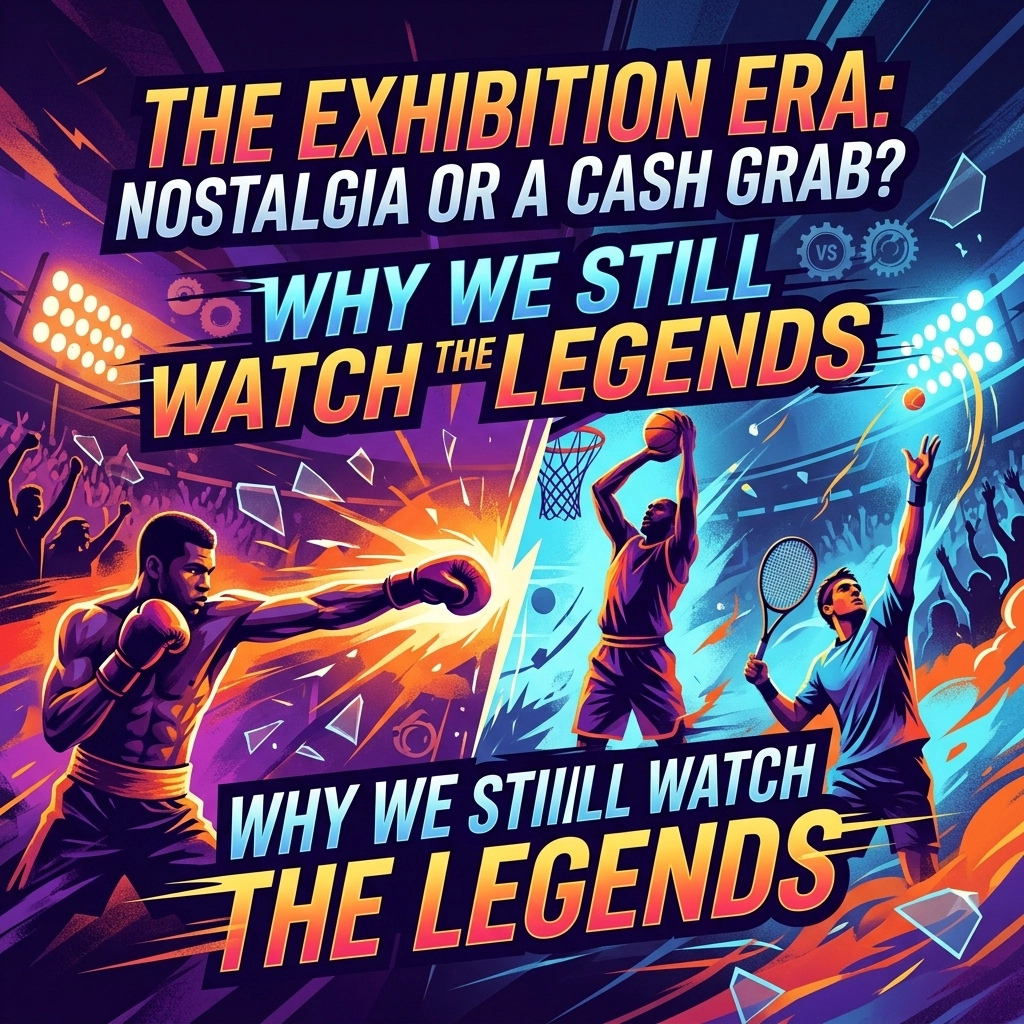
The Exhibition Era: Nostalgia or a Cash Grab? Why We Still Watch the Legends
![[HERO] The Exhibition Era: Nostalgia or a Cash Grab? Why We Still Watch the Legends](https://cdn.marblism.com/nFyme4FkDRx.webp)
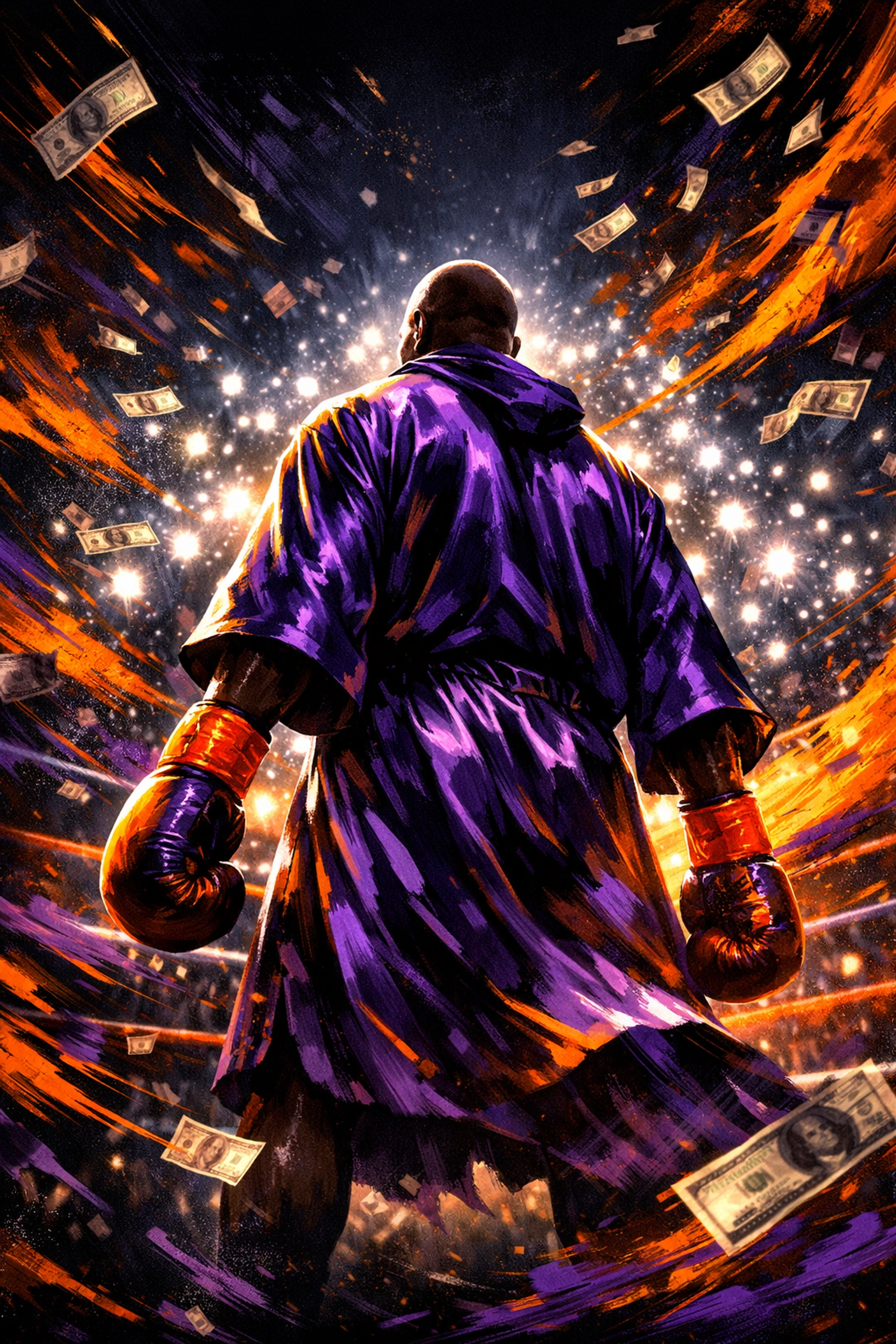
The lights dim, the smoke machines hiss, and a man who should be at home enjoying a quiet retirement walks toward a ring illuminated by the neon glow of a multi-million dollar production. Boxing is no longer just a sport; it has transformed into a high-stakes time machine with a very expensive ticket price. We are officially living in the “Exhibition Era,” a strange, polarizing period where the legends of the 90s and 2000s are more relevant than the hungry lions currently holding the belts.
Is it a “heavyweight farce” or is it exactly what the fans want? From Floyd “Money” Mayweather Jr. essentially turning the ring into a private ATM to Manny “PacMan” Pacquiao chasing the ghost of his former self, the lines between professional competition and pure entertainment have blurred into a bloody, profitable mess.
The Mayweather Blueprint: Legal Bank Robbery
Floyd Mayweather doesn’t call it boxing anymore. He calls it “legal bank robbery.” Since retiring with a perfect 50-0 record, Floyd has mastered the art of the exhibition. He isn’t fighting for legacy; he’s fighting for the lifestyle. Whether it’s taking on a Japanese kickboxer, a YouTuber, or the grandson of a mob boss, Mayweather has realized that people will pay to see the “Pretty Boy” masterclass, even if the stakes are non-existent.
But here is the raw truth: Floyd is a genius. He figured out that the “0” on his record is a brand, and as long as he doesn’t take a “real” fight, that brand remains untarnished. He dances, he smiles, he gets paid nine figures, and he leaves without a scratch. It’s the ultimate finesse. But does this help boxing? Or does it distract from the actual pound-for-pound greats who are trying to make a name for themselves? When the casual fan cares more about who Mayweather is sparring with than who is top of the rankings, the sport has a visibility problem.
The Pacquiao Itch: When Legends Can’t Let Go
While Mayweather treats boxing like a business transaction, Manny Pacquiao treats it like a calling. That’s the danger. We’ve seen the rumors of a “real” comeback, and we’ve seen the exhibitions against martial artists that look like high-speed sparring sessions. There is something inherently nostalgic about seeing that signature left cross, but there’s also something deeply uncomfortable about it.
Unlike Mayweather, who avoids taking shots, Pacquiao’s style has always been built on fire. Watching a legend in his mid-40s try to recapture that lightning is like watching an old rockstar try to hit the high notes: it’s impressive that they’re still on stage, but you’re constantly worried they’re going to collapse. When we talk about p4p disrespect and why the rankings are broken, we have to acknowledge that the oxygen in the room is being sucked up by these nostalgia acts.
The Psychological Trap: Why We Keep Clicking
Why do we watch? Why did 41.4 million people tune in to see Jake Paul take on a 58-year-old Mike Tyson? Research suggests that nostalgia serves as a powerful psychological coping mechanism. When the present feels uncertain or the current crop of stars lacks the “larger-than-life” charisma of the previous generation, we look back. We want to feel the way we felt in 1996 or 2005.
The entertainment industry knows this. Whether it’s Disney pumping out sequels or boxing promoters putting two 50-year-olds in a ring, they are selling a feeling, not a result. We aren’t paying for a tactical masterclass; we are paying to remember who we were when these guys were in their prime. It’s “sportainment” at its most potent.

The Rise of the “Circus Act”
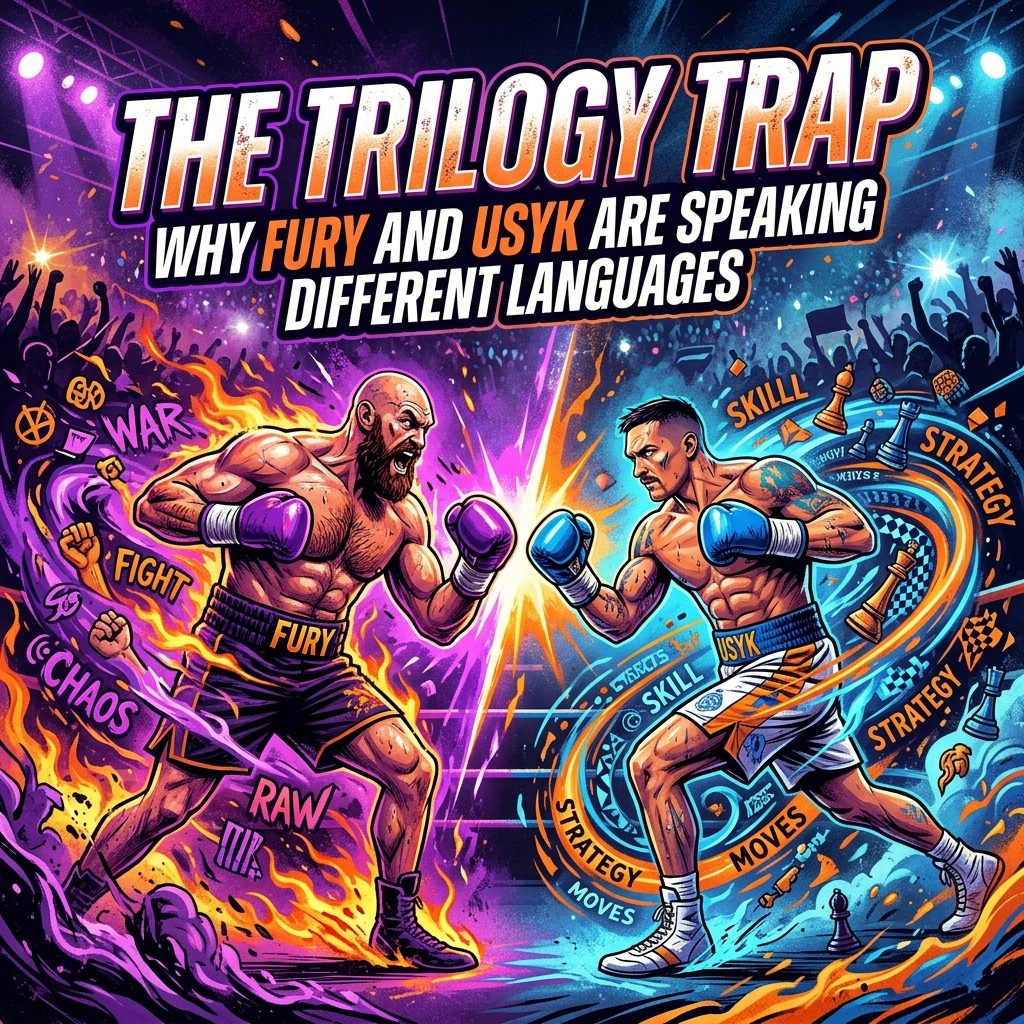
The Exhibition Era has paved the way for some truly bizarre matchups that make purists want to vomit. We’ve moved past legends fighting legends and entered a territory that can only be described as a “farce.” Take, for example, the recent talks of Usyk vs. Verhoeven and the heavyweight farce in Egypt. When a unified heavyweight champion is linked to crossover events rather than defending his straps against the next mandatory, the integrity of the belts starts to mean less than the weight of the purse.
This isn’t just about boxing; it’s about the business model. The Saudi influence and the Netflix entry into live sports have changed the math. They aren’t looking for “meaningful” fights in the traditional sense. They are looking for “events.” An event is something your grandmother knows about. An event is something that trends on X (formerly Twitter) for three days straight.
The Business of the “Bad Boy”
The Netflix model thrives on personalities. It’s why fighters like Ryan Garcia and Conor Benn stay in the headlines despite the controversies. We covered this in our deep dive into the Kingry vs. Conor Benn $15M bet on boxing’s bad boys. The Exhibition Era isn’t just about old guys; it’s about the “spectacle” replacing the “sport.”
If you can generate 40 million views by putting a legend in the ring with a social media star, why would you bother with the grueling process of building a traditional contender? This is the crossroads where boxing currently sits. On one hand, you have the pure, elite skill of a Crawford defeating Canelo in a historic Vegas super fight. That is the pinnacle of the sport. It’s technical, it’s dangerous, and it’s real.
On the other hand, you have the Netflix viewers hitting 41.4m for Paul vs. Tyson, which absolutely dwarfs the numbers of the actual “super fights.” The market is speaking, and it’s shouting for the legends.

Is It Good for Boxing?
This is where the debate gets raw. The purists will tell you that exhibitions are a cancer. They argue that these fights devalue the titles, confuse the casual fans, and put aging warriors at unnecessary risk. They aren’t wrong. When a legend looks like a shell of himself, it leaves a bad taste in the mouth. It’s hard to watch greatness diminish in real-time for the sake of a pay-per-view buy.
However, there is another side. These exhibitions bring eyes to the sport that wouldn’t otherwise be there. A kid who tunes in to watch Jake Paul might stay to watch Terence “Bud” Crawford. The money flowing into the sport from these mega-events trickles down (theoretically) to the undercards, giving young fighters a platform they never would have had on a standard Tuesday night show in a ballroom.
But let’s be real: the “trickle-down” is mostly a myth. The legends and the promoters are the ones getting fat while the sport’s infrastructure remains fractured. We are watching the business model of boxing change forever, and not everyone is going to survive the transition.
The “Heavyweight Farce” and the Future
What happens when there are no more legends left to trot out? We are currently cannibalizing the past to feed the present. Eventually, the well of 90s icons will run dry. If boxing doesn’t start creating new superstars with the same level of cultural crossover, the Exhibition Era will end with a whimper, leaving the sport in a vacuum.
The problem is that the current system doesn’t reward the best fighting the best. It rewards the most “famous” fighting whoever will generate the most clicks. When greatness is measured by followers rather than footwork, the soul of the sport starts to rot.

The Final Verdict
So, is the Exhibition Era nostalgia or a cash grab? It’s both. It’s a cynical exploitation of our childhood memories wrapped in a slick production package. It’s a way for fighters who gave their lives to the sport to finally get the “easy” payday they feel they were owed.
But as fans, we have to ask ourselves: are we okay with the “circus”? Are we okay with watching a 50-year-old Pacquiao move at half-speed just so we can remember what it felt like in 2009?
At Raw Sport, we call it like we see it. The Exhibition Era is a symptom of a sport that is struggling to define itself in the modern age. It’s entertaining, sure. It’s lucrative, absolutely. But let’s stop pretending it’s boxing. It’s theater. It’s a gala. It’s a “heavyweight farce” that we all keep buying tickets for.
The legends have earned their money, but the sport deserves its future. Until the promoters put as much energy into building the next generation as they do into milking the last one, we’re going to be stuck in this loop of “one more fight.”
And honestly? We’ll probably still watch. Because deep down, we’re all suckers for a legend.
Want more unfiltered takes? Check out our latest blog posts or reach out to us at Raw Sport. We don’t do fluff; we just do boxing.